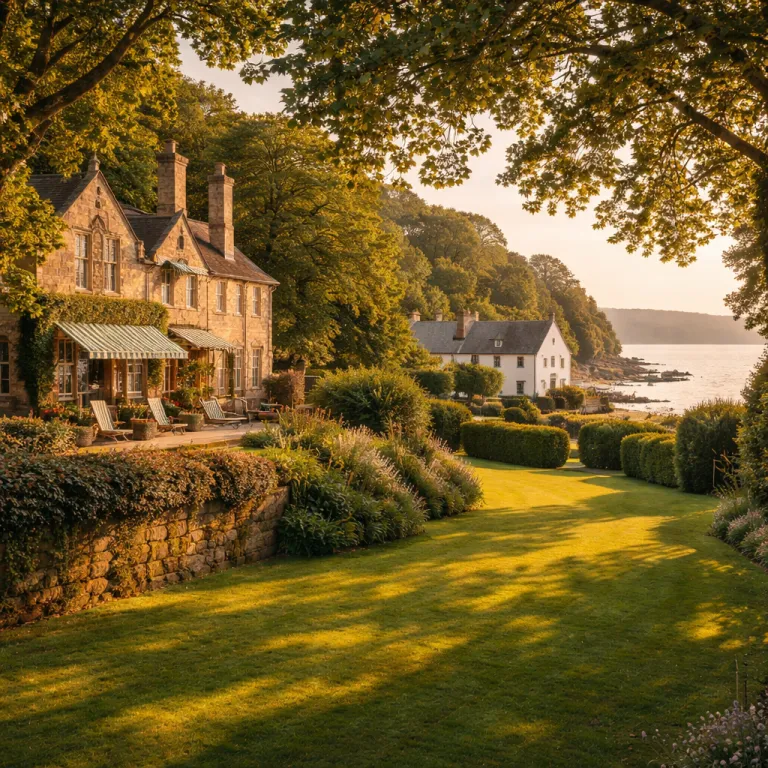
The real Cotswolds country house hotels circuit
Cotswolds country house hotels promise honey-coloured stone, clipped lawns and log fires. For many couples planning a stay in the Cotswolds, the reality is a patchwork of exquisite manor houses and a few complacent properties trading on a famous postcode. The art lies in choosing the right hotel in the right town, then giving it long enough to reveal its rhythm and service culture.
The region stretches across Gloucestershire, Oxfordshire, Wiltshire and beyond, with around twenty recognised country house hotels scattered between Cotswold villages and market towns. Gloucestershire holds the highest density of serious country house hotels, from Ellenborough Park above Cheltenham to Dormy House and Buckland Manor near Broadway, while Oxfordshire leans on riverside inns and smaller manor house conversions. Wiltshire and the fringes near Castle Combe and Whatley Manor offer quieter lanes, longer views and often better value per night for a similar standard of rooms and spa access, especially outside peak school-holiday dates.
Three nights is the real test for any country house hotel in the Cotswold hills. One night flatters the arrival ritual, the first walk through the garden and the novelty of a four-poster bedroom or generous rooms with mullioned windows. By the third evening you know whether the dining room holds its standard, whether the spa team remembers your preferences and whether the nearby village — perhaps Stow-on-the-Wold, Chipping Campden or Bourton-on-the-Water — still feels charming rather than crowded, so use that benchmark when comparing options.
The Daylesford halo and the price of a honey stone postcode
There is a particular problem in the Cotswolds country house hotels market that regular guests quietly call the Daylesford halo. Proximity to the famous organic farm shop and its neighbouring Cotswold villages can push rates to capital city levels, even when the country house hotel product — the rooms, the spa, the dining — sits firmly in the pleasant rather than the best category. Couples booking a romantic stay on the Cotswolds side often assume that a higher price guarantees a better manor or house hotel experience, which is not always the case and can distort value for money.
Properties within a few miles of Daylesford sometimes rely on a thatched roof, a fashionable inn-style bar and a reflex of guests arriving from London, rather than on sustained investment in bedrooms and service. You may find compact rooms with limited garden views, a spa that feels like an afterthought and dining that leans heavily on safe classics, while hotels in the wider Cotswolds quietly deliver more generous suites and calmer lounges. This is where a broader view of luxury rural retreats in the UK, such as those highlighted in this guide to exceptional countryside escapes, helps you benchmark value beyond a single fashionable postcode and compare facilities across regions.
Look instead at how a country house or manor house uses its setting and history. A seventeenth-century house hotel with a modest spa but a serious kitchen and a walled garden supplying the menu can feel far more indulgent than a flashier property nearby with louder interiors. When comparing options, ask directly about room sizes in square metres, the number of treatment rooms in the spa and whether the chef leads the dining concept or simply maintains a standard menu for weddings and events; hotel websites, booking engines and the Michelin Guide online usually list these details, so you can compare like for like.
Gardens, grounds and the quiet power of landscape
In the best Cotswolds country house hotels, the garden is not decoration but the heart of the stay. Long borders, ancient trees and carefully managed kitchen plots shape how you move through the day, from early walks before breakfast to late evening drinks on the terrace. Some estates, such as Lucknam Park and Whatley Manor, are renowned across the United Kingdom for grounds that feel like private parks rather than hotel lawns, with mapped walks and waymarked routes published on their own sites.
Whatley Manor, a refined country house with extensive gardens, shows how landscape and gastronomy can work together when the kitchen takes produce seriously and the paths invite you to wander between courses. Lucknam Park, just beyond the formal Cotswold boundary yet firmly part of the same circuit, pairs its long drive and avenues with a spa that justifies a full day of your stay, while the equestrian centre adds another layer of countryside immersion. These are properties where three nights allow you to explore different walking routes, notice how the light changes over the garden and still feel you have more things to do on a return visit without leaving the estate.
By contrast, some hotels in the Cotswolds present a handsome country house façade and then offer little more than a compact lawn and a token herb bed. You may find that the most atmospheric stroll involves leaving the grounds entirely and heading towards nearby Broadway, Bourton-on-the-Water or Chipping Campden for a loop through fields and lanes. If landscape matters to you, consider how other rural estates such as this elegant Highland retreat at The Pines House in Grantown-on-Spey use their setting, then ask Cotswold properties specific questions about acreage, mapped walks, access to longer trails and whether they provide printed route cards; most hotels publish at least headline figures on their own sites.
The chef question, from Michelin stars to honest inn cooking
Food is where Cotswolds country house hotels either justify their rates or quietly coast. A generous bedroom and a pleasant spa can be found in many regions, but a kitchen with a clear point of view turns a simple stay into a memorable escape. When you are planning a three-night break, the quality and variety of dining options matter as much as the thread count on the bed linen, especially if you prefer to dine in rather than drive to nearby villages each evening.
Whatley Manor currently holds one Michelin star, and the tasting menus there show a precision that rewards guests who build their stay around dinner rather than treating it as an add-on. Lucknam Park has held a Michelin star for many years, which signals a long-term commitment to culinary standards that many hotels cannot match, while Calcot & Spa leans into relaxed yet polished dining that suits couples who want serious cooking without formality. At the more contemporary end, Cowley Manor Experimental brings the Experimental Group’s Paris and London sensibility to a Cotswold manor house, pairing the C-Side Spa with a restaurant that feels closer to a city brasserie than a traditional country inn, according to recent write-ups in national broadsheets.
Not every guest needs Michelin stars, but every couple deserves honest cooking that respects the region. When assessing hotels across the Cotswolds, ask how many nights you could happily eat in, whether there is a second more casual dining space and how the menu changes across the seasons. If the most enthusiastic recommendation you receive is for a nearby Swan Hotel or village inn rather than the house hotel restaurant itself, that tells you where the property has chosen to invest; independent guides, recent reviews and the Michelin Guide website are useful tools for cross-checking these claims and confirming current awards.
County by county: where to book, and where to return
Gloucestershire is the powerhouse of Cotswolds country house hotels, with Ellenborough Park, Dormy House, Buckland Manor and several others forming a tight circuit within a short drive of Cheltenham and Broadway. These hotels combine historic manor architecture with modern spa facilities, and they give you easy access to Cotswold villages such as Chipping Campden and Stow-on-the-Wold for daytime wandering. Oxfordshire offers fewer grand estates but compensates with riverside inns and smaller country house hotels that suit couples who prefer intimate rooms, quieter dining rooms and easier rail access from London or Oxford.
On the southern edge, Wiltshire and the area around Castle Combe and The Manor House provide some of the most romantic settings for a stay, with stone cottages, wooded valleys and lanes that feel far from main roads. Here, properties like Whatley Manor and Lucknam Park sit within reach of the Cotswold escarpment yet enjoy their own sense of seclusion, which makes them ideal for longer stays where the spa, the garden and the restaurant become your world for a few days. To the east, Barnsley House and similar country house retreats balance grown-up style with genuinely dog-friendly policies, so couples can bring a pet without sacrificing standards of service or bedroom comfort, and can still access Cirencester and Bibury within a short drive.
Over multiple visits, certain names emerge as worth a second or third stay. Calcot & Spa, built partly within the tithe barn of the former Kingswood Abbey, offers a relaxed yet polished base for couples who want space, a serious spa and easy drives to towns like Tetbury and Cirencester. Ellenborough Park, with its grand manor house silhouette above the racecourse, rewards repeat guests who enjoy long walks straight from the door and a choice of rooms that range from cosy inn-style spaces to larger suites, while properties such as Slaughters Manor, Lords of the Manor and Barnsley House remain favourites for those who value characterful country house hotels over sheer scale and prefer a sense of place to sheer opulence.
How to read the details: rooms, miles, dogs and quiet luxury
Choosing between Cotswolds country house hotels often comes down to details that do not show clearly on a booking engine. Room descriptions can hide the difference between a compact bedroom under the eaves and a generous suite with a garden terrace, so always ask for exact sizes and photographs of the specific category. Remember that three nights in a small room can feel very different from a single romantic stay, especially if the weather keeps you indoors and you plan to use the room as a living space as well as a place to sleep.
Distance matters too, both in miles and in driving time along narrow lanes between Cotswold villages. A hotel that looks nearby on the map may involve a slow cross-country route, which affects how easily you can reach Broadway, Bourton-on-the-Water, Stow-on-the-Wold or Chipping Campden for daytime things to do. If you plan to explore widely, consider a base that sits centrally within the Cotswold region, or split your stay Cotswolds-style between two properties so you experience different landscapes and dining scenes; a simple comparison table of room size, price band, dog policy, spa facilities and awards can help you decide.
For many couples, a dog-friendly policy is now part of the luxury equation, but standards vary widely between hotels across the Cotswolds. Some country house estates genuinely welcome dogs in certain rooms, lounges and even parts of the garden, while others simply tolerate them in a few ground-floor bedrooms with limited access to shared spaces. If you prefer a quieter, more grown-up atmosphere, you may choose a property that restricts dogs to specific wings, then pair that with a refined rural address elsewhere in the United Kingdom, such as this Welsh escape at an elegant bed and breakfast in Merthyr Tydfil, to balance your itinerary and compare different approaches to country hospitality.
FAQ
What amenities do Cotswolds country house hotels offer?
Amenities often include fine dining, spas and landscaped gardens. In practice, that usually means a full-service restaurant, a bar, a spa with treatment rooms and pool, and extensive grounds for walks. Many hotels also offer extras such as cookery classes, bike hire or guided tours of nearby towns and villages, which are typically listed in the facilities section of their official websites and can be checked against independent travel guides.
Are Cotswolds country house hotels suitable for families as well as couples?
Many properties welcome families, but the atmosphere often leans towards couples seeking a quiet stay. Some estates, such as Calcot & Spa, provide family-friendly rooms, children’s pools and supervised activities, while others focus more on adults and limit facilities for younger guests. Always check the hotel policy on extra beds, children’s dining times and access to spa areas before booking, as these details can vary even within the same county and may change seasonally.
How can I book a stay at these hotels?
Reservations can be made via hotel websites or travel agencies. For the most accurate information on specific rooms, spa availability and dining times, booking directly with the property by phone or through its official website is often best. Specialist agents who know the Cotswolds can also help you compare options across different counties and match you with the right style of country house, especially if you are planning a multi-stop itinerary or need advice on dog-friendly suites.
How far in advance should I book Cotswolds country house hotels?
These hotels are popular year-round, especially over weekends and during school holidays. Booking several months ahead gives you the best choice of bedrooms and dining times, particularly if you want a specific room type or a dog-friendly option. Last-minute stays are possible midweek, but you may need to be flexible on location and room category; checking cancellation policies, midweek offers and shoulder-season dates can also reveal better-value stays.
Which Cotswolds areas are best for a first time stay?
For a first visit, many couples choose the triangle between Broadway, Stow-on-the-Wold and Bourton-on-the-Water, where several renowned country house hotels sit within a short drive of classic Cotswold villages. Those who prefer quieter lanes and larger estates often look towards the Gloucestershire and Wiltshire borders near Whatley Manor, Lucknam Park and Castle Combe. If you plan multiple trips, consider starting in the busier northern Cotswold area, then exploring the southern and eastern edges on a second stay to experience a different pace of rural life and a broader mix of manor houses, inns and spa hotels.