
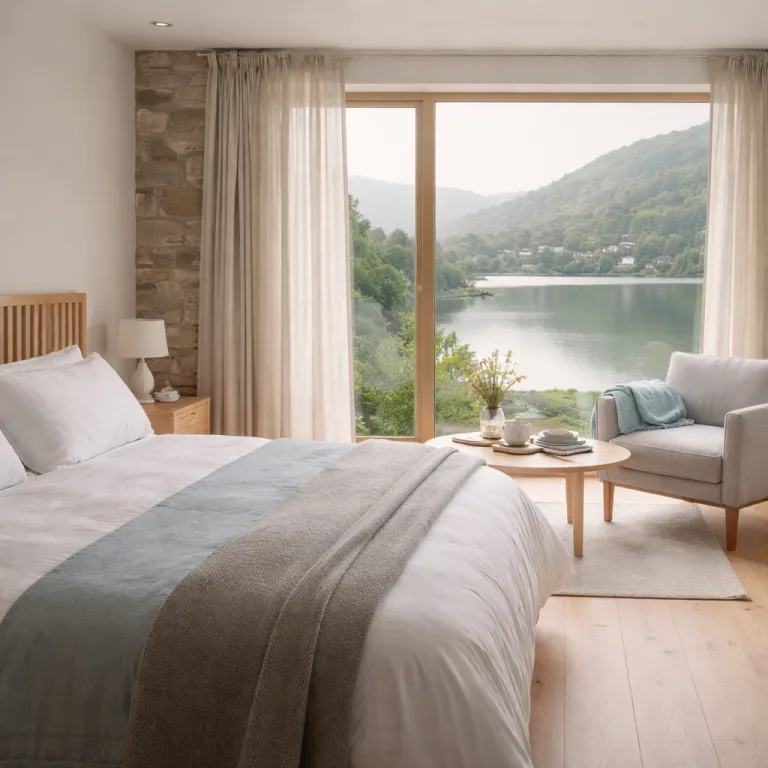
Why the western Lake District is a distinctive place to stay
Sea on one side, high fells on the other, and far fewer crowds in between. The western Lake District feels markedly wilder than the postcard scenes around Windermere, yet it offers a quietly luxurious base for a thoughtful stay. If you are weighing up where to book a hotel in Cumbria, this corner rewards travellers who value space, scenery and a slower rhythm over nightlife and shopping.
The landscape does most of the talking. Peaks like Scafell and Great Gable rise steeply above deep glacial valleys, with narrow roads threading past stone farm houses and small holiday parks. Many hotels and country house properties here lean into that drama, framing the lake or the district coast through tall sash windows, or setting hot tubs on sheltered terraces where you can watch the light shift across the fells.
Expect accommodation that ranges from traditional house hotels with panelled lounges and open fires to contemporary glamping lodges tucked into woodland. There are also farm glamping sites, self-catering apartments and cottages, and low-key caravan holiday parks, often within a short drive of a lake or the sea. The choice is broad, but the overall feel remains intimate rather than urban.
This area suits walkers, couples seeking a discreet retreat, and families who prefer outdoor activities to indoor entertainment. Dog friendly and wider pet friendly options are common, reflecting the walking culture. If you want a stay built around food and drink, fell walking, and evenings in a comfortable room rather than a packed bar, the western Lake District is a strong candidate.
Understanding the western side: geography, lakes and access
Between Eskdale and the district coast, the western Lake District stretches from the Irish Sea inland to some of England’s highest ground. It feels more remote than the central lakes, partly because access roads are narrower and public transport thinner, but that remoteness is exactly what many guests come for. You trade convenience for atmosphere, and for many, it is a fair exchange.
Eskdale itself is a narrow, green valley, threaded by a small river and overlooked by rugged ridges. Hotels, cottages and farm accommodation here often sit along the lane that runs from the coast up towards the high passes, with views that change dramatically in different seasons. Further north, small settlements sit within a 10–15 km drive of both the sea and a lake, giving you the option of coastal walks one day and high fell routes the next.
Distances look short on the map, but driving times can be deceptive. A 20 km journey may involve single-track lanes, steep gradients and sheep that take their time crossing. When choosing a hotel or holiday home, check how long it really takes to reach the places you care about, whether that is a particular lake, a favourite farm café, or a cluster of outdoor activities.
For those arriving from the south, the approach via the A595 along the coast feels almost like a decompression chamber. Villages appear and disappear quickly, caravan holiday parks sit just behind dunes, and then, suddenly, the fells rise ahead. By the time you reach your accommodation, the sense of having left the everyday behind is strong.
Types of accommodation: from country houses to glamping lodges
Choice in the western Lake District is less about sheer volume and more about character. You will not find endless rows of identical hotels; instead, a patchwork of country house hotels, small lake-side properties, farm-based stays and discreet holiday parks. Each comes with its own rhythm and level of service, so it pays to be clear about what you want from your stay.
Traditional country house accommodation typically offers generous rooms, high ceilings and landscaped grounds. These houses often sit slightly above the valley floor, giving long views towards a lake or the sea. Expect lounges with deep sofas, a focus on food and drink, and a quieter, more grown-up atmosphere. They suit couples, solo travellers and small groups who value calm over bustle.
Glamping lodges and luxury glamping pods, often on working farms, provide a different kind of retreat. Think timber-clad cabins with private hot tubs, compact but well-designed interiors, and outdoor seating that makes the most of the views. Farm glamping works particularly well for families and dog friendly stays, with fields, streams and informal play space on the doorstep.
Holiday homes, self-catering cottages and catering apartments are scattered through hamlets and along minor roads. Some are part of a larger holiday park with shared facilities; others are standalone houses with their own gardens. Caravan holiday options, from simple pitches to more permanent units, tend to cluster closer to the district coast, appealing to guests who want easy beach access and a sociable, relaxed environment.
Rooms, suites and the details that matter
Room choice in the western Lake District is less about flashy design and more about thoughtful details. A lake or fell view, for instance, can transform a simple room into a memorable one, especially in a house hotel where large windows frame the landscape. When you book your stay, it is worth checking not just the size of the room, but its orientation and outlook.
In older country houses, rooms can vary significantly even within the same category. One double might have a bay window and a roll-top bath, another a more compact layout but better light. If you care about long soaks after a day on the fells, pay attention to bathroom descriptions; if you plan to spend afternoons reading in your room, natural light and seating become more important than floor area.
Glamping lodges and farm-based accommodation focus on clever use of space. Expect open-plan layouts, often with a small kitchenette, a dining nook and a bed area that can be curtained off. Hot tubs, fire pits and outdoor seating are common extras, turning the outside into an extension of your room. For pet friendly stays, look for enclosed decks or small fenced areas that make life easier with dogs.
Families may prefer interconnecting rooms, small suites, or self-contained cottages where children can sleep separately. In the western lake area, such options are more limited than in the central district, so early planning helps. Whatever you choose, the most satisfying stays tend to come from matching the room’s character to how you actually live on holiday, rather than chasing the largest space.
Food, drink and catering styles in the western lakes
Dining in the western Lake District leans towards substance over spectacle. Many hotels and country houses offer a restaurant that serves as the social heart of the property, with menus built around Cumbrian produce: fell-bred lamb, local cheeses, and fish from the nearby coast. The best experiences feel rooted in place, not generic “hotel food”.
For guests who prefer flexibility, self-catering apartments and holiday homes give full control over meals. You can stock up in small shops along the A595 or at farm gates selling eggs and seasonal vegetables, then cook at your own pace. This suits longer stays, families with specific dietary needs, and travellers who like to picnic by the lake at lunchtime rather than return to a dining room.
Glamping sites and farm glamping often sit somewhere in between. Some provide simple breakfast baskets or on-site food and drink options on certain evenings; others rely entirely on nearby pubs and cafés. If you plan to arrive late or travel with children, it is worth checking how easy it is to eat within a short drive, especially in quieter valleys like Eskdale where options can be limited midweek.
Bed and breakfast stays remain a classic Lake District choice. A well-cooked morning plate, served in a small dining room with views towards the fells, can set the tone for the day. Here, the quality of the breakfast and the timing flexibility matter more than elaborate dinner menus. When comparing places to stay, consider whether you want a fully catered hotel rhythm or the looser structure of self-catering and B&B combinations.
Who the western Lake District suits best
Travellers who choose the western Lake District usually know what they are looking for. They are less interested in shopping streets and more in trailheads, viewpoints and quiet evenings. If your ideal holiday involves long walks, a good book and unhurried meals, this side of the district aligns well with that vision.
Outdoor enthusiasts benefit most. With valleys like Eskdale within easy reach, you can step from a country house or farm accommodation straight onto paths leading towards high passes and ridges. Many hotels and cottages are used to muddy boots and wet jackets; drying rooms and informal spaces where you can spread out maps are common, even if not always advertised loudly.
Couples seeking a retreat will appreciate the slower pace. A lake-facing room, a small bar with a considered selection of drinks, and perhaps a private hot tub under dark skies can feel more indulgent than a busier resort. The relative quiet of the district coast in the evening, especially along minor roads west of the main villages, adds to that sense of seclusion.
Families and dog owners find the area forgiving, but with caveats. Pet friendly and dog friendly options are widespread, yet distances between attractions can be greater than expected. If you need playgrounds, indoor attractions and short, buggy-friendly walks, you may need to plan more carefully than in the central lakes. For older children who enjoy outdoor activities, however, the mix of lakes, beaches and fells is hard to beat.
How to choose your location: lake, valley or coast
Deciding where to base yourself within the western Lake District is as important as choosing the hotel itself. A lake-side setting offers instant drama and easy access to water-based activities, but often with fewer dining alternatives within walking distance. A valley like Eskdale provides a sense of enclosure and direct access to high-level walks, while the district coast brings big skies, dunes and long, flat beaches.
Lake-side stays suit travellers who want to wake up to water views and spend days circling the shore or taking short climbs to nearby viewpoints. Here, country house hotels and small houses converted into accommodation tend to cluster, sometimes with their own jetties or gardens that run down to the water. Even if you never leave the immediate area, the changing light on the lake keeps the experience varied.
Valley bases are more about immersion in the fells. Farm stays, glamping lodges and cottages line lanes where sheep outnumber cars, and where the soundscape is dominated by streams and wind. If your priority is walking, this is often the most efficient choice: less driving, more time on the hill. The trade-off is fewer evening options for food and drink beyond your own hotel or a small local pub.
Coastal locations along roads like the stretch near Ravenglass station offer a different mood again. Caravan holiday parks, holiday homes and small hotels sit close to the shore, giving easy access to sand and estuary walks. This works well for mixed groups where some want strenuous hikes and others prefer gentler, level routes. When you book your stay, think in terms of daily patterns: where you will walk, where you will eat, and how much driving you are comfortable with.
Practical booking advice for a refined western lakes stay
Planning a stay in the western Lake District benefits from a little more forethought than in busier parts of Cumbria. With fewer hotels and a strong appeal to repeat visitors, the best-located rooms and cottages can fill quickly, especially in school holidays and during popular walking seasons. Booking in advance is wise if you have specific needs such as dog friendly rooms, interconnecting spaces or access to hot tubs.
When comparing places to stay, look beyond headline labels. “Country house” can mean anything from a formal, service-led hotel to a relaxed house with minimal staffing. Check how many rooms the property has, whether there is an on-site restaurant, and how the accommodation describes its atmosphere. A ten-room house hotel on a quiet lane feels very different from a larger holiday park near the coast, even if both sit within the same district.
Consider seasonality carefully. Winter stays bring log fires, dramatic skies over the lake and quieter paths, but shorter days and a reduced choice of food and drink options nearby. Summer offers long evenings, outdoor seating and easier driving conditions, yet also more traffic on narrow roads. Shoulder seasons in spring and early autumn often provide a balanced mix of light, colour and availability.
Finally, match your booking to your travel style. If you like structure and being looked after, a full-service hotel or house with half-board catering will suit. If you prefer independence, a self-catering cottage, glamping lodge or farm-based accommodation gives you the freedom to shape each day. In the western lake area, the most rewarding stays come when the accommodation, the landscape and your own pace align.
Key figures about staying in the Lake District
- The wider Lake District offers around 200 hotels across its valleys and lakes, giving a broad spectrum of accommodation styles.
- Approximately 15.8 million visitors come to the Lake District each year, with the western side absorbing a smaller, more dispersed share of that total.
Traveller questions about western Lake District hotels
What are the best hotels in the Western Lake District?
The western Lake District is known more for characterful country houses, small lake-side hotels and farm-based accommodation than for large resorts. The “best” option depends on your priorities: walkers often favour valley locations close to trailheads, while those seeking a retreat may prefer a lake-facing country house with strong food and drink. Because properties vary widely in size and style, it is worth focusing on setting, room type and dining approach rather than chasing a single, universal favourite.
Are there pet-friendly hotels in the Lake District?
Pet friendly and specifically dog friendly accommodation is common throughout the Lake District, and the western side is no exception. Many hotels, cottages, glamping lodges and farm stays welcome dogs in certain rooms or units, often with direct outdoor access. Policies differ, though: some allow pets in lounges and bars, others restrict them to bedrooms and grounds. When choosing where to stay, check which areas are open to dogs and whether there are nearby walks that start directly from the property.
What activities are available near Lake District hotels?
Hotels in the western Lake District typically sit within easy reach of a wide range of outdoor activities. Walking and hiking dominate, from gentle lake circuits to demanding fell routes, but there are also coastal paths, cycling options and, in some areas, boating on nearby lakes. Families can combine valley walks with visits to small villages, heritage railways or simple beach days along the district coast. Many properties are used to guests planning active holidays and can suggest routes that start almost from the front door.